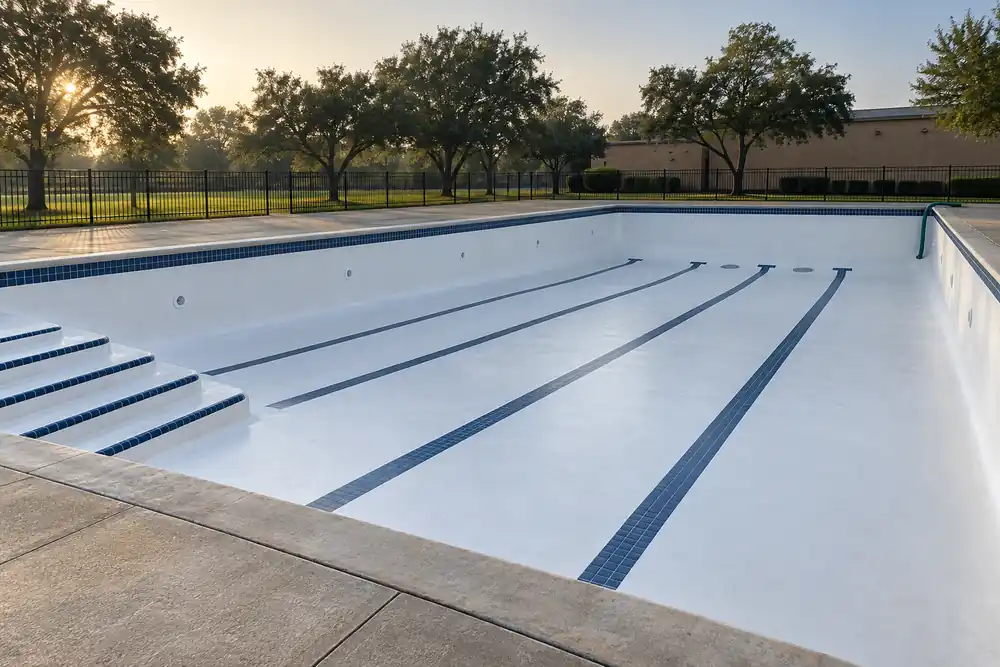
Pool Replastering in League City, TX
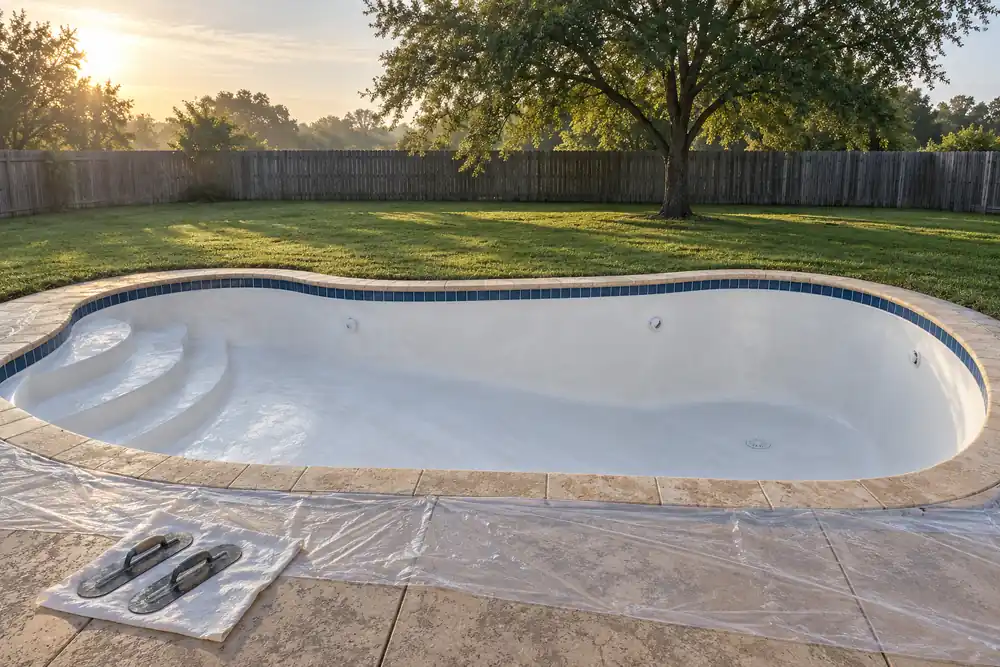
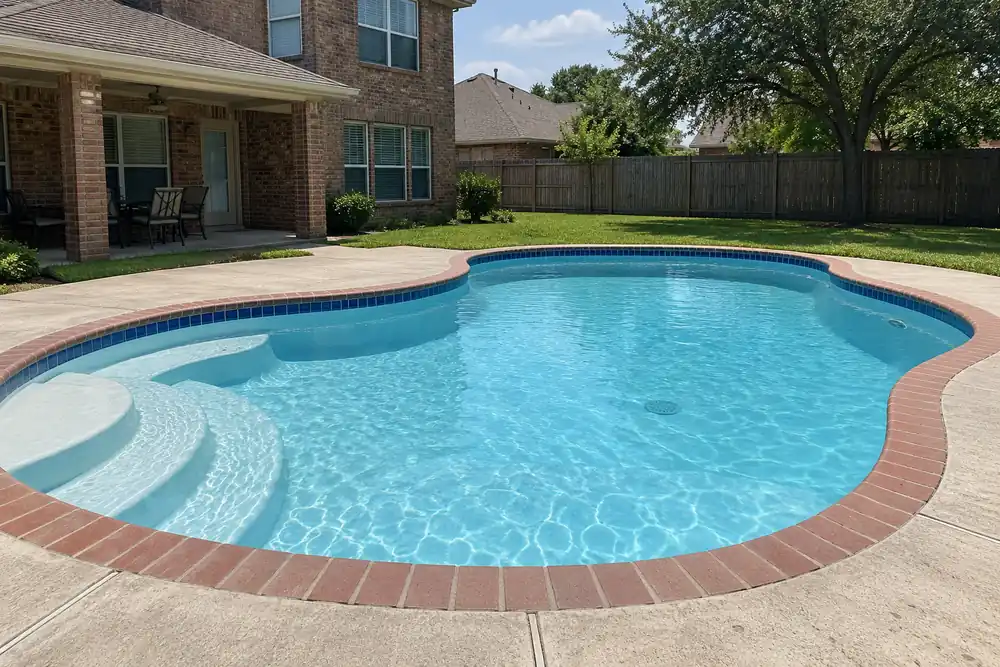
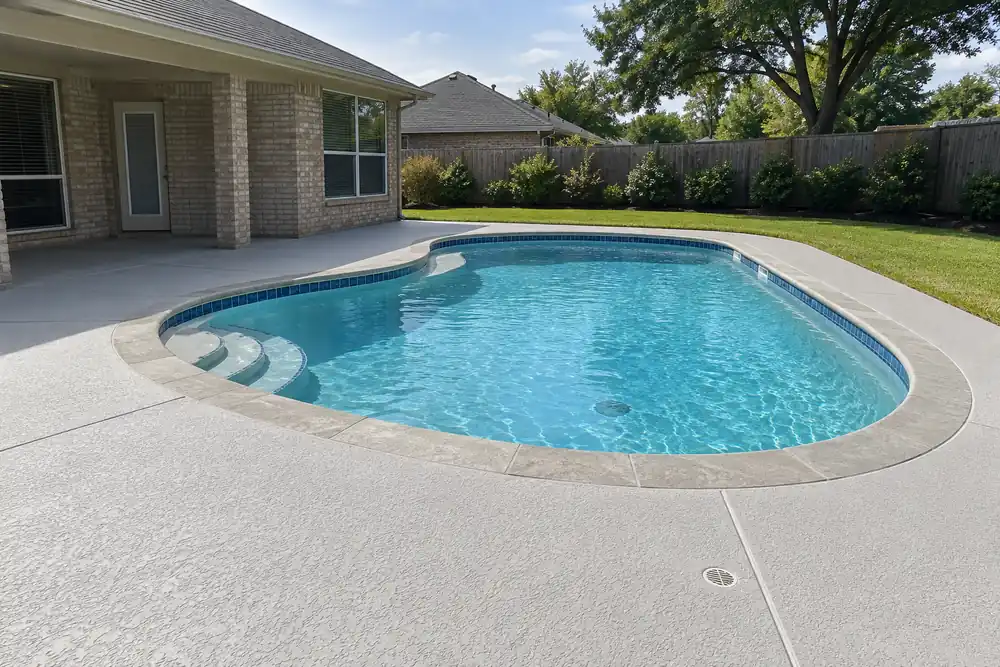
League City Pool Resurfacing does pool replastering in League City, Texas: a new coat of white marcite or colored plaster on a concrete pool, laid over a bond coat where the old plaster is sound or onto the bare shell after a chip-out. The National Plasterers Council describes white plaster as white cement, white marble aggregate and water, the most affordable finish, with a brilliant, light blue look underwater.
Estimates are free by phone or through the form. Expect a conversation about plaster color, whether your old plaster can be bonded over, and what the four weeks after the fill involve.
Call or request a free estimate any time, 24/7
No charge · answered 24/7
Get free estimates
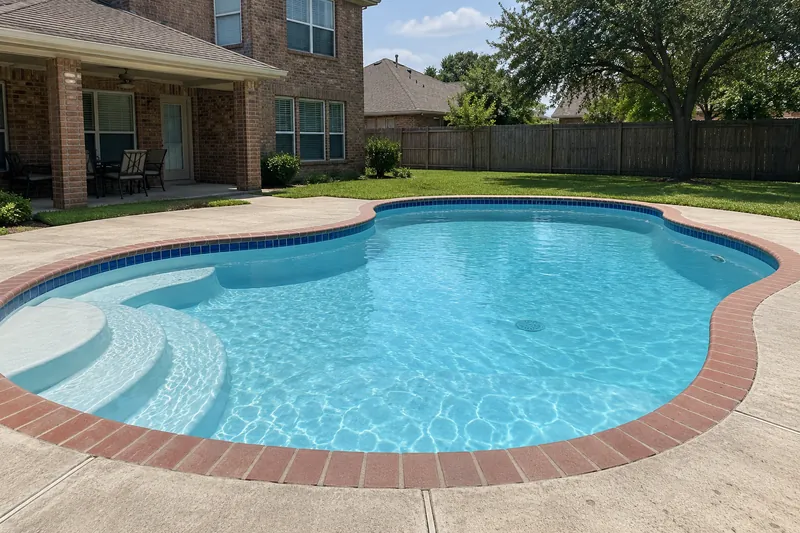
Replastering options: white marcite, colored plaster and admixtures
White marcite
Marcite is the trade's everyday name for white pool plaster, a mix mainly of white portland cement, marble dust and strengthening additives troweled by hand over the shell. Its whiteness starts with the cement: a bulletin from the National Plasterers Council and the Portland Cement Association says pool plaster's white cement typically carries 0.4 percent or less iron oxide, against 2.6 percent in gray cement. Hard-troweled, it should feel like 220-grit sandpaper or finer, though the Council warns it is relatively soft and reacts to water chemistry more than newer finishes do.
Colored plaster
Pigment brings out everything normal in white plaster. The Council says mottling, streaks, uneven color and crazing show more, and that none of this is a product deficiency; it traces fading to the materials, the application and the water chemistry rather than the sun. Premix-Marbletite says white, blue or gray bases read true blue and green, tan, black or brown ones blue-green.
Admixtures, or a step up in finish
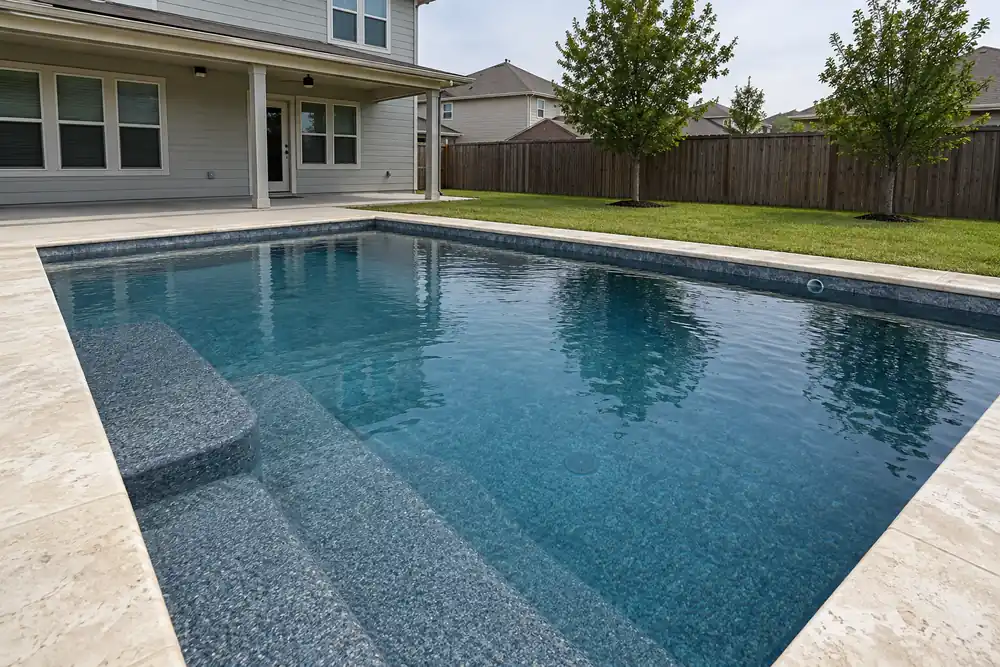
Pozzolan admixtures tie up calcium hydroxide, plaster's weakest element, and have been shown to cut etching, cracking and mottling, though the Council says they add cost and aren't fool-proof. A tougher surface means aggregate. Quartz pool finishes stand up far better to swings in water chemistry, and pebble pool finishes carry the longest surface rating. League City Pool Resurfacing gives free estimates on all three.
Call or request a free estimate any time, 24/7.
(281) 694-4352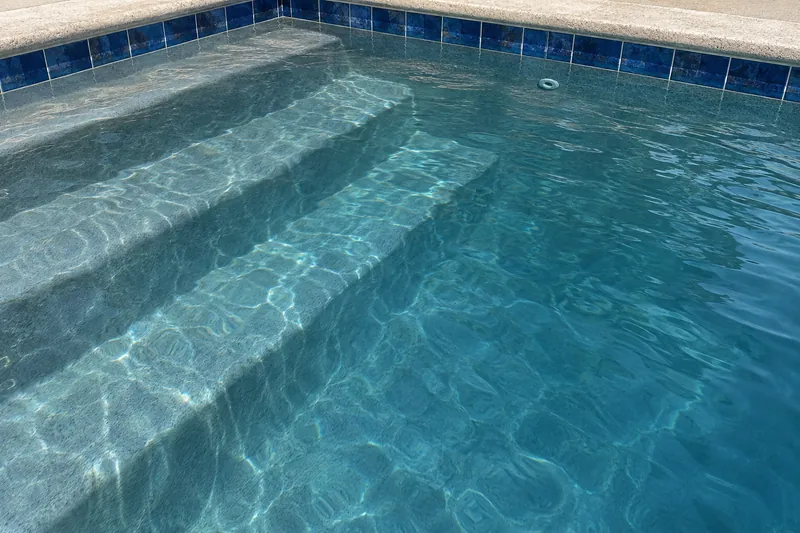
Old plaster prep before replastering: bond coat or full chip-out
Reading the old plaster
Universal White Cement lists the signs of delamination: raised, blister-like areas, patches near lights, tile lines and steps, and spider cracks centered on one patch. SGM's manual sounds out every hollow area, saws 3 inches outside it, removes the loose plaster and fills the holes with patching cement. A few isolated spots can sometimes be handled as pool plaster repair instead.
Bond coats over sound plaster
A bond coat grips the new plaster to the old. CL Industries makes its two-part PermaKote Select to mechanically bond new plaster over existing finishes, and says its AquaBond can cut the material needed for the new coat by up to 30 percent. SGM's Bond Kote cures at least 6 hours and may need reapplying if it's rained on.
Chipping out to the shell
Where the old finish is failing across the pool, it comes off. Universal White Cement names the usual causes of delamination: poor shell prep, poor bond-coat practice, cold joints, over-troweling, and stacking thin layers of plaster over a marginal old finish. Once the old finish has been chipped or sandblasted away, SGM says, a bond coat may not be needed, and its shell prep kills algae with a chlorine wash. League City Pool Resurfacing will talk through which route your pool needs.
Fittings, tile edges and thickness
SGM undercuts the old plaster 2 inches away from all tile and fittings and 3/8 inch deep, and plugs every inlet and main drain line during plastering. The Council says the finish can't level an uneven shell beyond its maximum thickness.
Call or request a free estimate any time, 24/7.
(281) 694-4352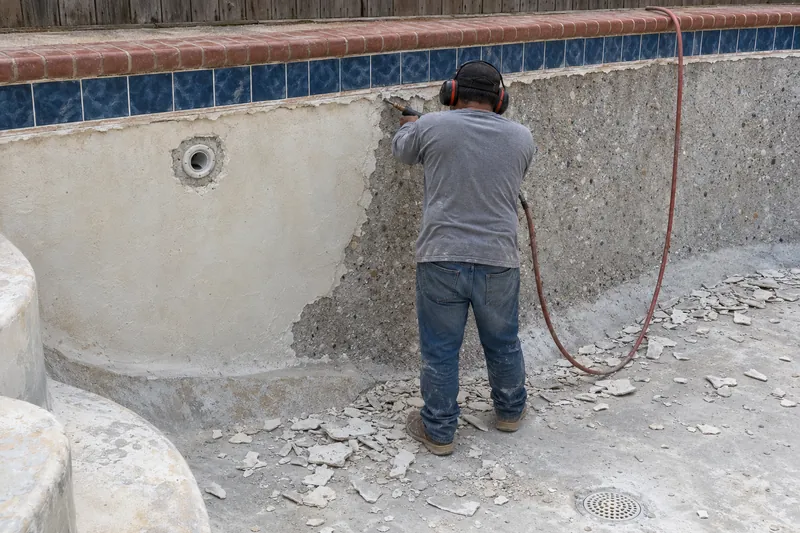
Replastering day through the 28-day start-up
Plastering in Gulf Coast heat
No standard limits the air temperature for plastering, the National Plasterers Council notes, but heat, dry air and wind shorten the set time and speed surface drying. Its answers include pre-soaking the shell, more experienced plasterers, an earlier start, tenting the pool, and cold water or ice in the mix. NOAA's League City station has a normal June-to-August high of 91.4°F.
Filling without a break
Traditional white plaster without modifiers is filled as soon as possible after final set. The Council ties a clean cloth to the hose at the deepest point, asks for a 24-inch water cushion first if a truck delivers, keeps sprinklers and rain runoff off the new finish, and runs the fill nonstop to mid-skimmer, since a pause can leave a bowl ring.
The start-up, day by day
The Council's start-up card brings alkalinity to 80 to 100 ppm and pH to 7.2 to 7.6 on day 1, adds chlorine to 1.5 to 3.0 ppm on day 3, raises calcium hardness in steps to at least 200 ppm from day 4, and keeps wheeled cleaners out for 28 days. Plaster dust has to come out by brushing and filtering inside the first 3 to 5 days, it says, or it hardens onto the surface and is difficult and expensive to remove. League City Pool Resurfacing will go through new pool plaster start-up with you before the fill.
Call or request a free estimate any time, 24/7.
(281) 694-4352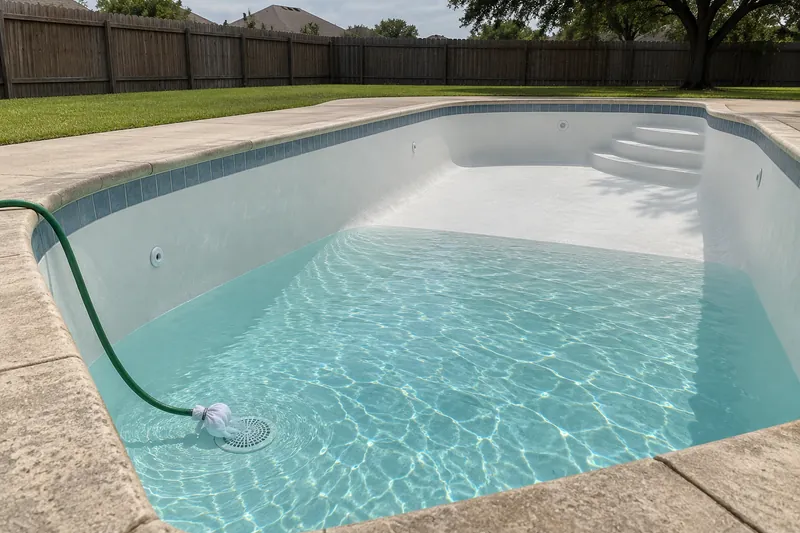
Replastering with League City fill water, drains and refills
Testing the fill water
The Council wants the fill water's calcium hardness above 200 ppm (150 ppm for some high-performance finishes) and says never to fill with softened or reverse-osmosis water. League City's 2025 water report gives 124 mg/L of total hardness, as calcium carbonate, and pH 8.1 for water from the City of Houston plant's entry point, with no calcium figure on its own, so the fill is tested for pH, alkalinity, calcium hardness and metals before the start-up.
Draining and refilling
From Stage 2 of League City's 2024 drought plan, the City may prohibit draining and refilling existing pools except to keep the structure sound, for proper operation and maintenance, or for safety, and the plan doesn't say whether a replaster qualifies. As of October 4, 2026, no official page we read announced a stage, so check the City's current stage before draining. Residential sewer billing caps at 10,000 gallons, so refill water above that adds no sewer charge. The guide to draining a pool before resurfacing covers the groundwater side, and a pool drain and acid wash follows the same rules.
Beyond League City, League City Pool Resurfacing also handles pool replastering in Nassau Bay and pool replastering in El Lago.
Call or request a free estimate any time, 24/7.
(281) 694-4352Pool replastering cost in the Houston area
Typical Houston-area prices for 2026 put standard white plaster at roughly $4,500 to $6,000 for a typical Houston pool of 12,000 to 18,000 gallons, with pool size and shell condition moving the number. Across the country, a standard-plaster replaster averaged $6,000 to $8,000 in 2025, by pool size, and a northwest Houston pool company says colored plaster adds 20 to 30 percent. A Houston builder gives 5 to 7 days for a straight replaster.
By that builder's account, hollow spots, delaminating plaster and a full chip-out in place of a bond coat all raise the price, and so do benches, steps and ledges, which get plastered too. These are published figures, not prices from League City Pool Resurfacing, and the guide to pool resurfacing cost in League City has the rest.
- White plaster, typical Houston pool (2026)
- $4,500–$6,000
- Standard plaster, national average (2025)
- $6,000–$8,000
- 15,000-gallon refill at City water rates
- $107.30
- 20,000-gallon refill at City water rates
- $154.80
Typical Houston-area and national figures with their years; refill water at League City's April 2026 residential rates, before the base charge. Not a quote.
Call or request a free estimate any time, 24/7.
(281) 694-4352Questions about replastering a pool
What is the difference between replastering and resurfacing a pool?
Replastering is one kind of resurfacing, the broader job of replacing a pool's worn interior surface in plaster, quartz, pebble, tile, paint or, on fiberglass, a sprayed coating. Replastering means the new surface is cement plaster, which the 2021 International Swimming Pool and Spa Code requires to follow the APSP/NPC/ICC-12 plastering standard. League City Pool Resurfacing handles both.
How much to replaster a 10,000 gallon pool?
No published source prices replastering by the gallon. The closest local figure is a Houston builder's 2026 baseline of roughly $4,500 to $6,000 in standard white plaster for a typical 12,000 to 18,000 gallon Houston pool. A 10,000 gallon pool falls below that size, and the builder notes that the pool's size and shape and the shell's condition move the price, so a firm number needs a look at the pool, which is free.
Can you plaster over old plaster in a pool?
Yes, if the old plaster is sound and properly prepared. SGM requires its Bond Kote bonding system whenever its finishes go over an existing finish, and Premix-Marbletite calls a bond coat absolutely mandatory on every renovation. The limits are thickness and bond: the Council's ceiling is a 3/4-inch average thickness, and Universal White Cement names stacking thin layers over a marginal old finish as a cause of delamination. No maker or industry body says how many times a pool can be plastered over before a full chip-out.
How long should a pool replaster last?
There's no single figure. The Council's own documents differ, a 5 to 8 year surface in its finish comparison against up to 20 years with proper care on its FAQ page, and Universal White Cement, a cement maker, expects 15 to 20 years when materials, application and water care are all sound. Closer to home, South Shore Harbour's 2021 reserve study planned its community pool's plaster on an 8 to 12 year useful life.
When can salt go into a salt-water pool after replastering?
Not in the first month. The National Plasterers Council's start-up card says salt-water pools get no salt within the first 30 days, and salt-system makers publish their own waits in their manuals, so check yours too. Universal White Cement adds that salt systems, heaters and spillways put extra stress on the plaster around them.
Book a free pool replastering estimate in League City
Tell League City Pool Resurfacing roughly how big the pool is, what finish it has now and whether you want white or colored plaster. Calls and estimate requests are answered 24/7.