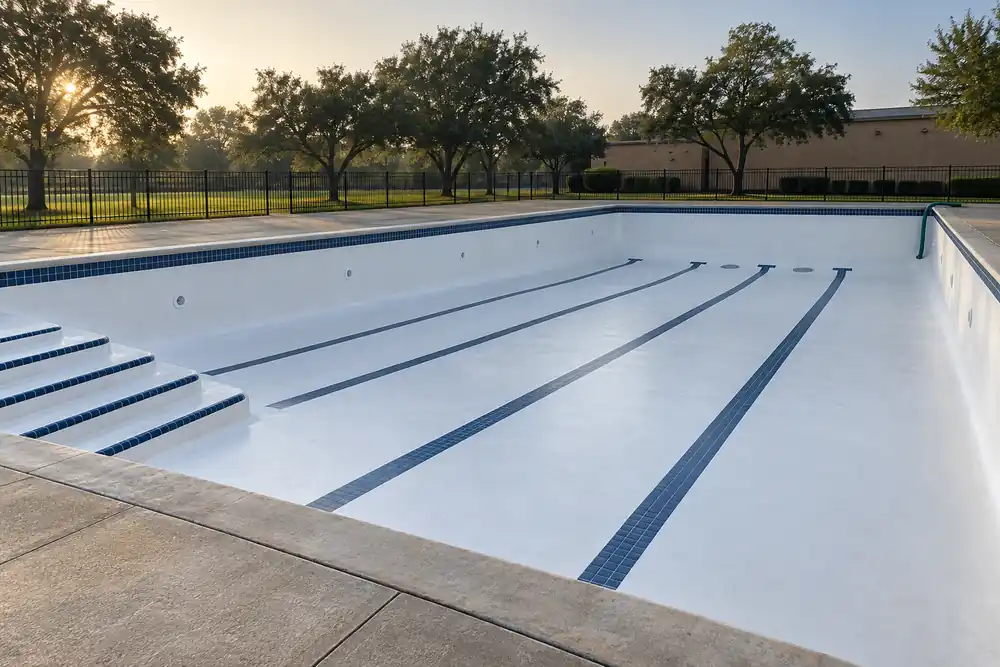
Pebble Pool Finishes in League City, TX
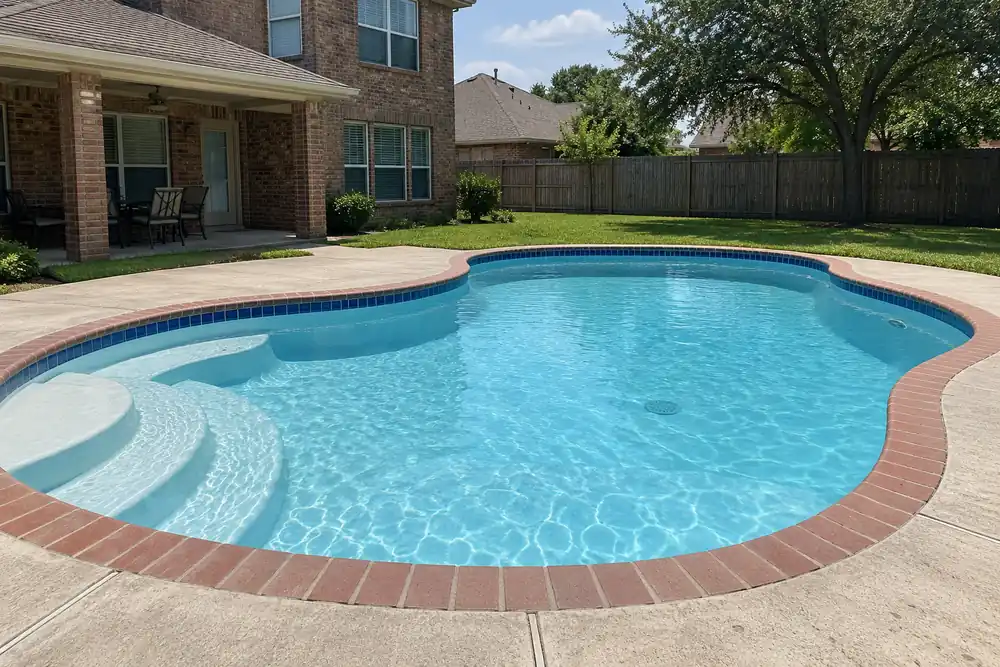
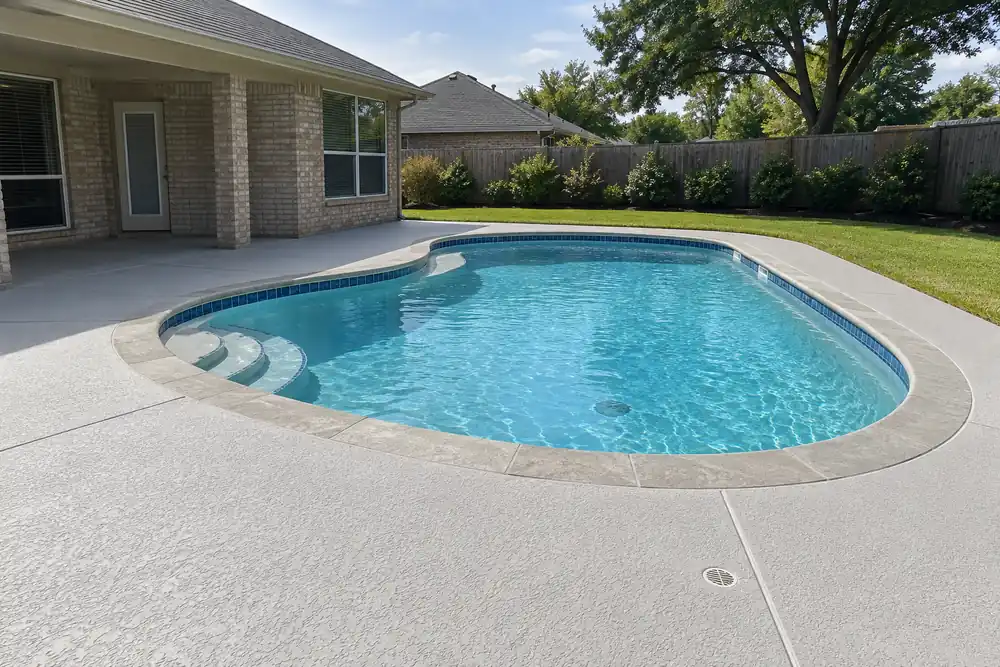
League City Pool Resurfacing installs pebble pool finishes in League City, Texas: exposed pebble in coarse, mid-size and fine stone, polished pebble, and blends with glass beads or shell. The National Plasterers Council puts pebble in its textured, upgraded-cost group and rates it a 12 to 18 year surface, the longest in its comparison of pool finishes.
Estimates are free by phone or through the form. We'll talk through stone size and color, how the old surface comes off, and how the new finish is started up on League City's fill water.
Call or request a free estimate any time, 24/7
No charge · answered 24/7
Get free estimates
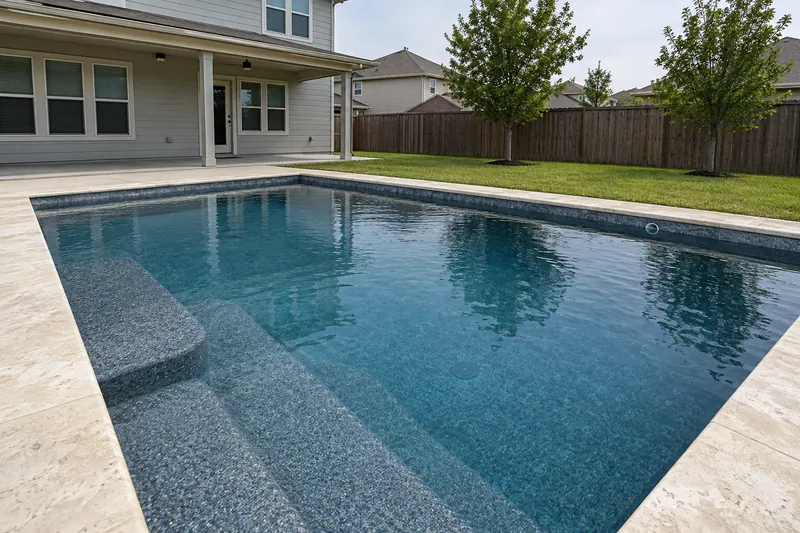
Pebble finish types: coarse, fine, polished and glass bead
Coarse to fine pebble
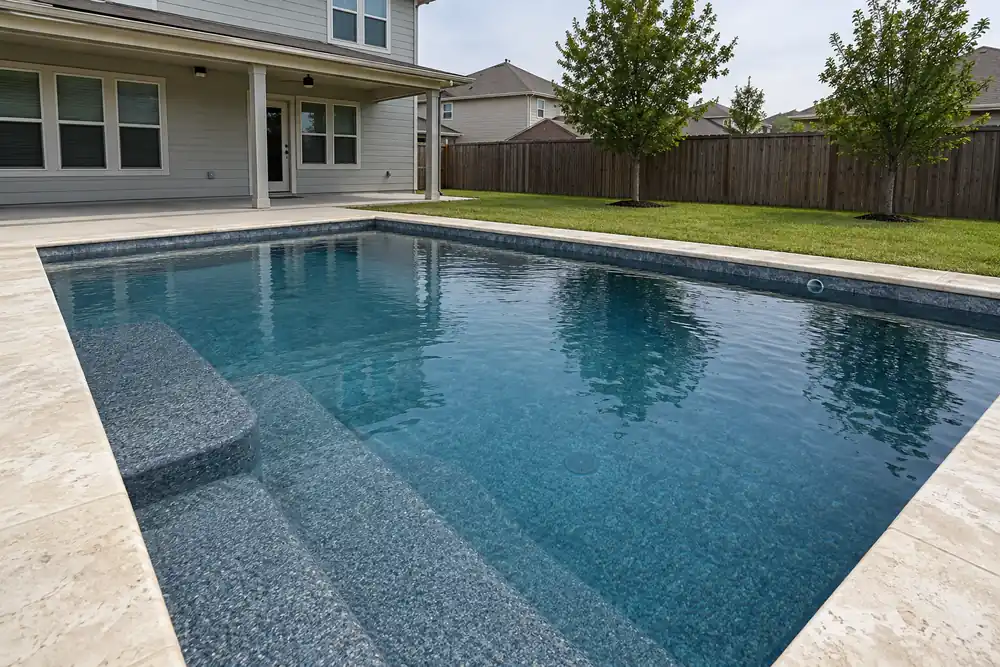
Pebble Technology International, which has made pebble finishes since 1987, screens naturally tumbled stones from New Zealand to Chile by size so the texture comes out even. Its original PebbleTec uses the largest stones, PebbleSheen, its most popular, slightly smaller pebbles, and PebbleFina the smallest, for the smoothest feel. NPT's StoneScapes runs the same way, from Micro through Mini, its most popular for over 15 years, to Regular, whose smooth pebbles can still be felt underfoot.
Polished pebble
Polished finishes are smooth to the touch but look like exposed aggregate, because polishing is the last finishing step, and the National Plasterers Council rates them 8 to 12 years. Pebble Technology International buff-polishes its PebbleBreeze, a mix of pebble, glass beads and shell, and NPT says its marble-and-glass PolishedScapes can be re-polished over its life, which it calls the most benign fix, one that can avoid patching or replastering.
Glass bead blends
NPT lets owners add colored glass beads to any StoneScapes pebble mix, one, two or three bags of them depending on the sparkle wanted, and Pebble Technology International says the smooth beads in its PebbleBrilliance add foot comfort as well as color. Glass narrows later stain repairs: the Council's torching method can't be used safely on glass-bead surfaces, and only very delicately on pebble. For an all-tile interior instead, see glass tile pool finishes.
Call or request a free estimate any time, 24/7.
(281) 694-4352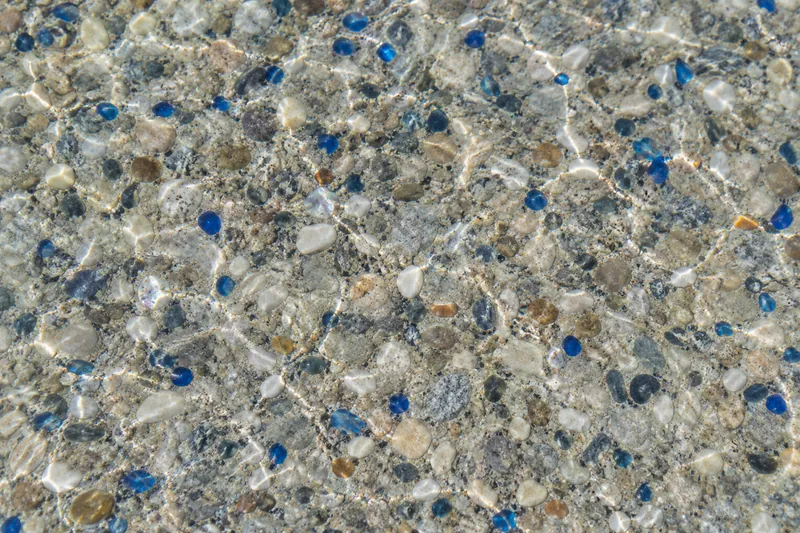
Pebble pool finishes compared with quartz and plaster
In the National Plasterers Council's comparison, pebble rates 12 to 18 years against 10 to 15 for quartz and 5 to 8 for traditional white plaster. The Council puts pebble's durability down to river pebble being chemically inert and unlikely to react with pool water; the trade-offs it names are a slightly more textured surface, a higher cost and possible damage under the most extreme chemical conditions.
Pebble is judged by texture rather than smoothness, since the cement binder is removed to leave raised stone, and the trade has set no tolerance for texture yet. In Tile Council of North America tests, NPT's StoneScapes White Regular measured 0.73 for wet slip resistance, and PebbleTec tests at 9,913 psi in compression at 28 days, by Pebble Technology International's published lab results.
The Council lists quartz as an affordable-cost finish that can range from smooth to textured; see quartz pool finishes. White plaster, the most affordable, is covered under pool replastering, and the guide pool finishes compared sets all four side by side. League City Pool Resurfacing gives free estimates on each.
Call or request a free estimate any time, 24/7.
(281) 694-4352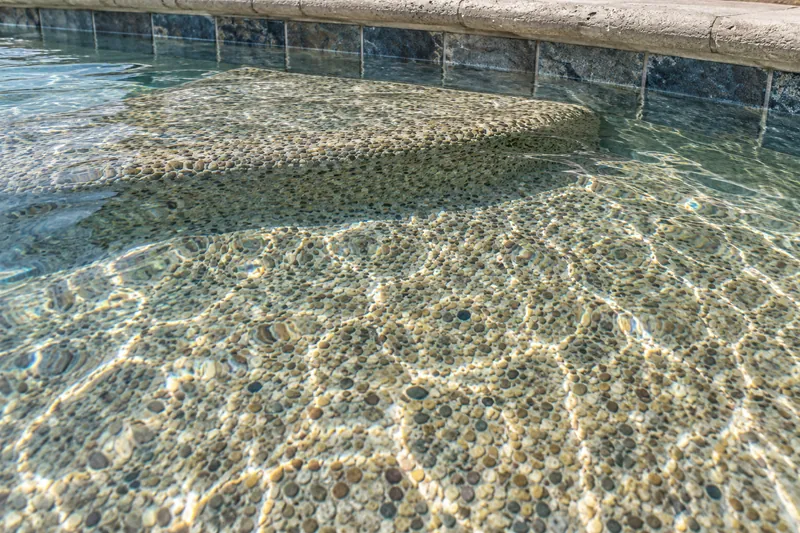
How a pebble pool finish is applied
Prep and the two coats
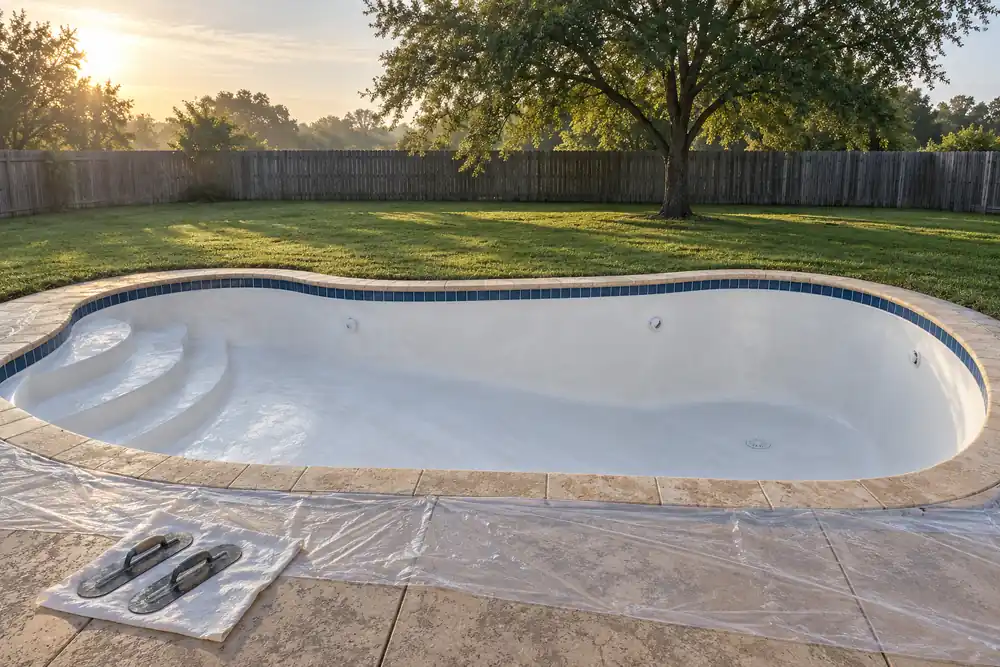
Pebble Technology International's remodel process strips off the existing surface first, then cuts the new finish back at least 1/2 inch where it meets tile or stone so it keys in, with no beveled or ramped edges. It specifies two coats: a scratch coat troweled hard for a mechanical bond, then a second coat once the first is stiff enough to hold it; PebbleSheen needs at least 3/8 inch. The company sells its finishes only to its trained builders and installers, not to homeowners.
Exposing the stone
The stone blend is mixed with cement, water, pigment and additives, sprayed on through a hose and hand-troweled by applicators in spiked shoes, then washed to bare the pebbles. NPT trowels its StoneScapes hard at least three times and acid washes it once it's hard, most often the next day, warning that relying on acid alone usually leaves the stone underexposed.
Heat and cold on the day
Pebble Technology International won't take cold-weather work unless the day's average tops 40°F and the shell is unfrozen, and in hot weather it wants absorbent shells wetted evenly first; NPT adds that a new finish must not freeze in its first 48 hours. NOAA's station in League City averages 9.3 nights a year at 32°F or below and 75.8 days at 90°F or above, so League City Pool Resurfacing will talk through timing at the estimate.
Call or request a free estimate any time, 24/7.
(281) 694-4352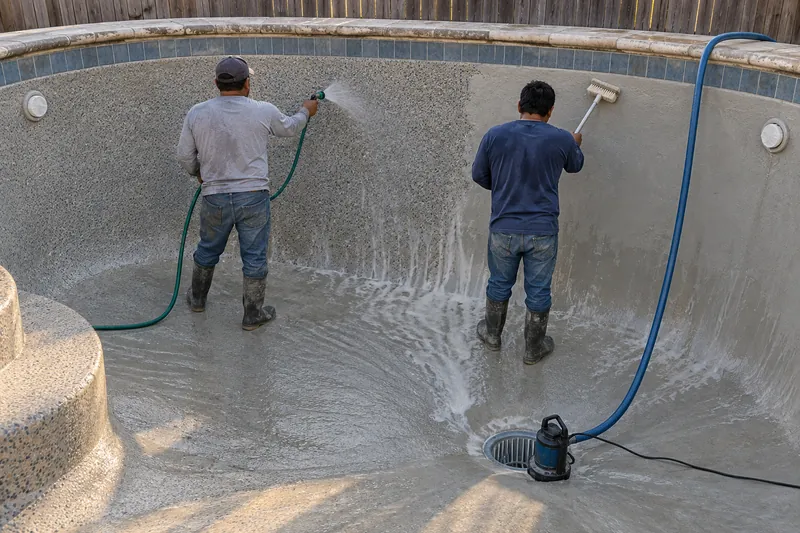
Pebble finish start-up and care on League City water
The first 28 days
After application comes a break-in of roughly 1 to 3 days, Pebble Technology International says, while the applicator finishes the surface, then a start-up aimed at pH 7.0 to 7.4, total alkalinity of 80 to 90 ppm, calcium hardness of 200 to 250 ppm and a saturation index between -0.3 and +0.3. Its care page asks for brushing three times a day for the first three days and twice a day for the next ten, with the equipment running nonstop for at least seven days. Acid goes in often, daily for the first two weeks, because plaster dust raises the pH.
Salt, heat and fill water
The company asks owners to wait at least 14 days before heating the water and at least 28 days before adding salt for a salt chlorinator, and not to fill a new finish with softened water. League City's 2025 water report gives total hardness of 124 mg/L and pH 8.1 for water from the City of Houston plant's entry point and no figures for its other surface supply, so League City Pool Resurfacing will talk through a fill-water test before the start-up.
Draining it later
Pebble Technology International warns that a drained finish sits exposed to the weather, and that freezing and thawing then brings a high risk of rock loss, cracking or delamination, which its warranty doesn't cover, so it advises asking the installer before draining. The League City station dropped to 15°F in February 2021.
Beyond League City, League City Pool Resurfacing also installs pebble pool finishes in Clear Lake Shores and handles pebble pool resurfacing in Deer Park.
Call or request a free estimate any time, 24/7.
(281) 694-4352Pebble pool finish questions
How long does a pebble finish last on a pool?
The National Plasterers Council rates pebble a 12 to 18 year surface, the longest of the finishes it compares, and says a finish reaches its expected life only when materials, workmanship and balanced water are all right. Makers state warranty terms rather than lifespans: Pebble Technology International warrants its pebble, glass bead and pigment for 5 years to the original residential owner, with the installer covering workmanship for at least 5 years.
How much does it cost to resurface a Pebble Tec pool per square foot?
National 2025 averages run $10 to $20 a square foot for Pebble Tec resurfacing, which comes to $4,000 to $16,000 on a typical backyard pool of 400 to 800 square feet. No Houston-area source prices it by the square foot; typical Houston-area prices in 2026 put a pebble finish at roughly $7,500 to $10,000 for a 12,000 to 18,000 gallon pool. The guide to pool resurfacing cost in League City has more, and League City Pool Resurfacing prices your own pool free.
Does pebble tec need to be resurfaced?
Eventually. The Council's 12 to 18 years is a surface life, and it notes pebble can still be damaged under the most extreme chemical conditions. Pebble Technology International treats some pebble or glass loss in the first weeks, color variation, scale and cracking as normal rather than defects, says improper water chemistry voids its warranty, and lists loose pebbles among the problems that usually start a project.
How do I resurface my PebbleTec pool?
Through an installer: Pebble Technology International doesn't sell its finishes to homeowners, only to its Certified Builders, Elite Builders and Authorized Installers. For a remodel the old surface is stripped and the new finish goes on in two coats. The day after, a PebbleSheen surface is lightly scraped and acid-treated, and the pool is filled right away, without stopping, until the finish is fully underwater.
What is the most expensive type of pool finish?
Of the common finishes, full tile. National 2026 ranges put tile at $20,000 to $50,000 or more, against $9,000 to $20,000 or more for pebble, $7,000 to $15,000 for quartz and $5,000 to $10,000 for basic plaster. Among the cement finishes, pebble sits at the top in typical Houston-area prices as well, at roughly $7,500 to $10,000 for a 12,000 to 18,000 gallon pool in 2026.
Get a free pebble pool finish estimate
Tell League City Pool Resurfacing the pool's rough size, its finish now and the look you have in mind, from coarse pebble to polished. Calls and estimate requests are answered 24/7.