Tanning Ledges and Beach Entries in League City, TX
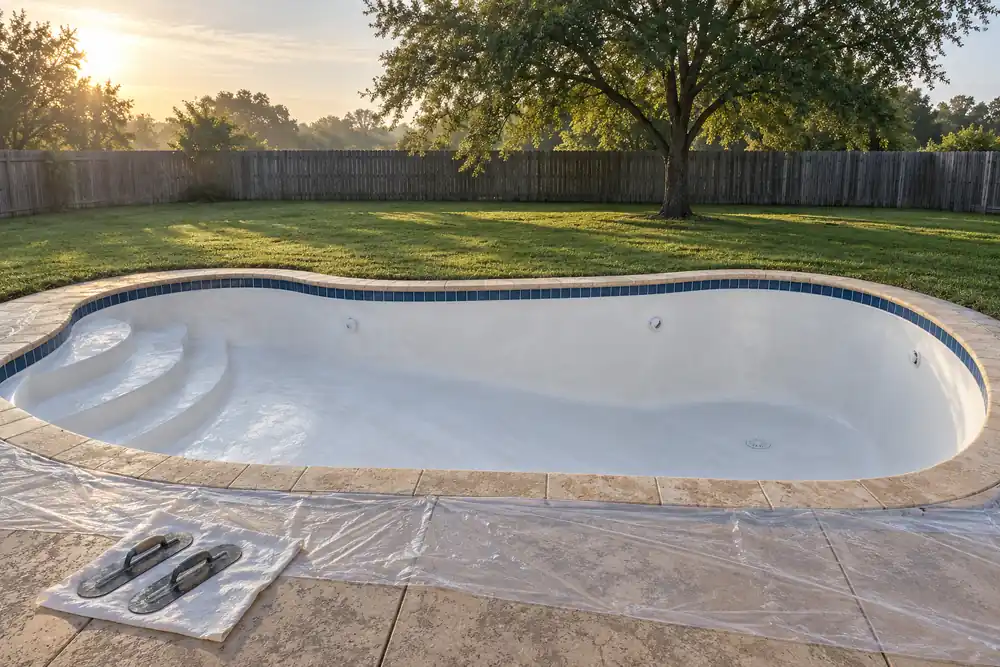
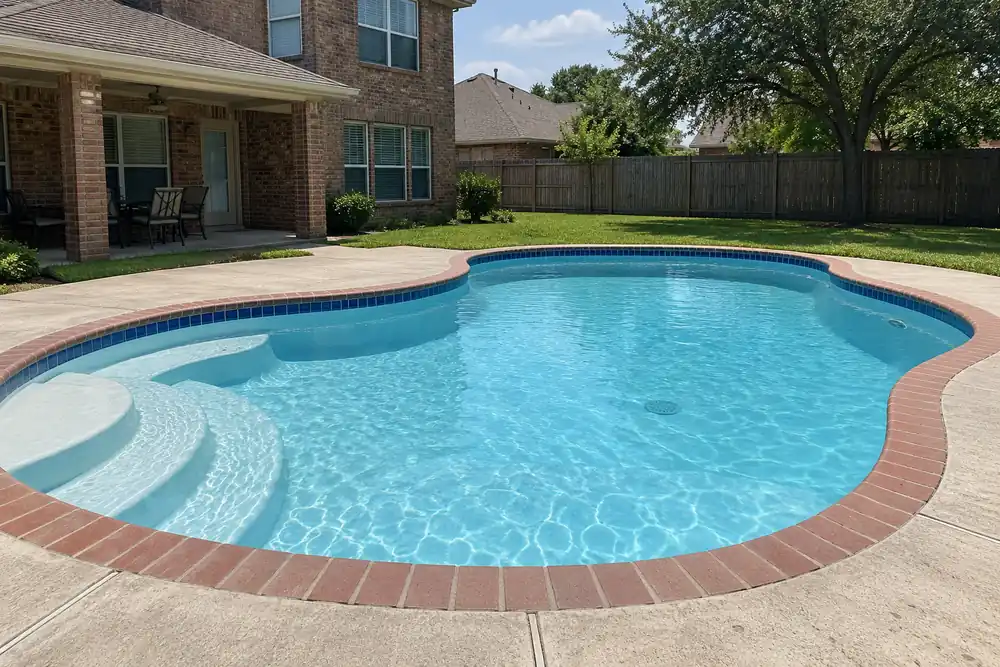
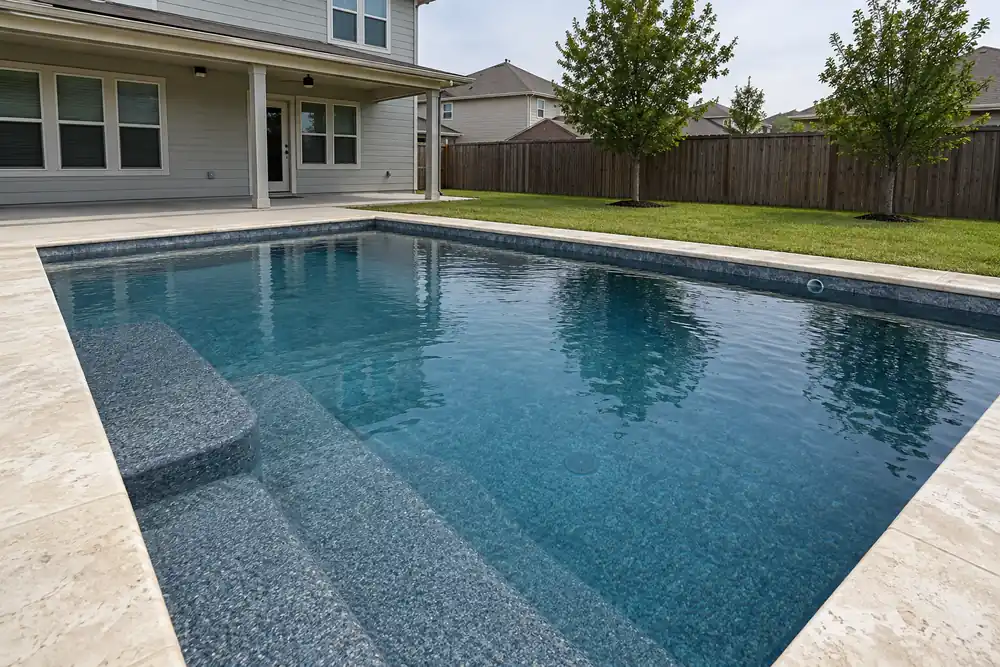
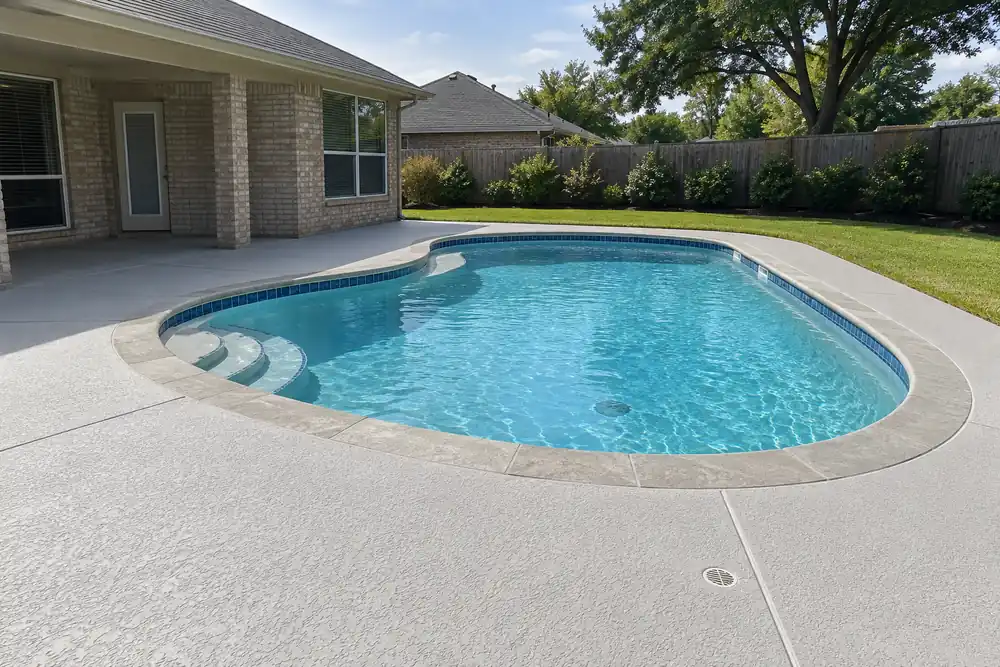
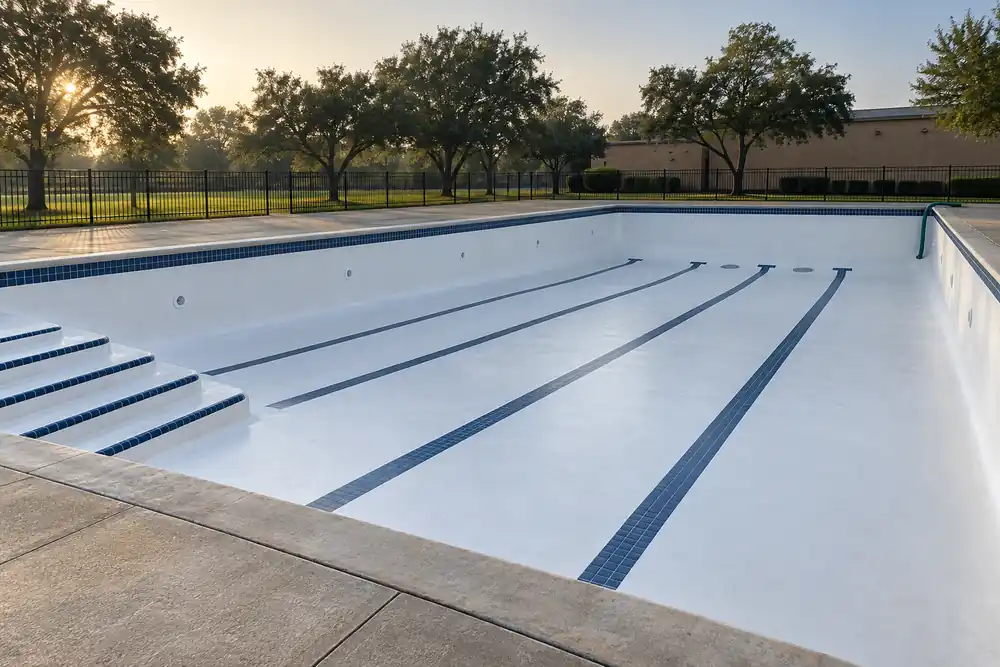
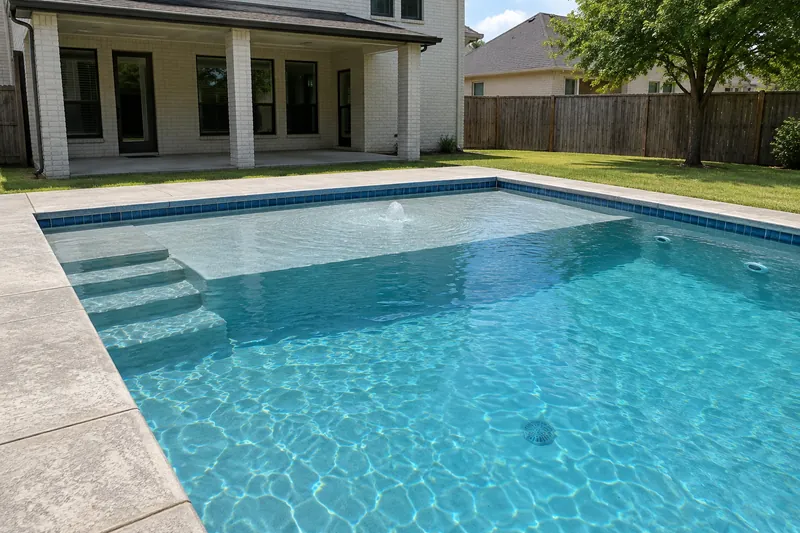
League City Pool Resurfacing builds tanning ledges and beach entries in League City, Texas, adding a sun shelf, a sloping beach entry or a wide bench to the pool you already have. In the CDC's Model Aquatic Health Code, such an underwater shelf can be a widened top tread of the stairs or a separate area many feet across, its main purpose being lounging in very shallow water, whether in chairs or on couch-shaped contours.
Free estimates are a call or a form away. We'll go over the ledge's depth, where it meets the steps, how new concrete joins the old shell, and when the drain-down can happen under the City's drought plan.
Call or request a free estimate any time, 24/7
No charge · answered 24/7
Get free estimates
Tanning ledge design: depth, size and in-pool furniture
How deep a tanning ledge sits
In-pool furniture is built around a shallow shelf. Ledge Lounger puts most tanning ledges, sun shelves and baja shelves at 6 to 9 inches of water, fits its Signature Chaise to water up to 9 inches, and makes deeper models where a ledge runs deeper. Those figures belong to a furniture maker, not to a code. The International Swimming Pool and Spa Code does set a figure for a backyard pool's underwater seats, benches and swimouts: their top surface can be at most 20 inches under the design waterline.
Measuring a ledge for chairs and loungers
Ledge Lounger's fit guide takes the length and width where the water meets the ledge, not at the coping, reads the depth in more than one spot since many ledges taper, and checks the slope, because a pronounced one can affect how steadily furniture sits. League City Pool Resurfacing will go over those measurements with you at the free estimate.
Bubblers in a tanning ledge
Bubblers are made for shallow water: Pentair rates its ColorVision for depths between 2 and 12 inches, mounted flush with the finish. Its spacing, water line and conduit are covered under pool water features.
Call or request a free estimate any time, 24/7.
(281) 694-4352Beach entries and sloping entries for backyard pools
The slope a beach entry may have
In a backyard pool, the code allows a beach or sloping entry no steeper than 1 unit vertical in 7 horizontal, a 14 percent slope, and where steps or benches are built into the entry, no riser taller than 12 inches. Beach and sloping-entry areas are also exempt from the code's minimum shallow-end depth of 33 inches, which otherwise applies at the shallowest point of the shallow area.
Ledges, benches and entries as the way in and out
Once a shallow area is more than 24 inches deep at its shallowest point, the code wants a way in and out there, sited shallow of the first change in slope, and it accepts steps, stairs, ladders, treads, ramps, beach entries, underwater seats, benches, swimouts or another approved design. Steps built with a new ledge follow the code's pool stair rules: treads no shallower than 10 inches, each giving 240 square inches or more to walk on, and every riser except the top and bottom one 12 inches high at most.
HOA, apartment and hotel pools follow public-pool rules
Texas health rules class the pools at apartments, condominiums, hotels and property owners associations as Class C public pools, even though they are closed to the general public, and the state takes up the code's public-pool chapter. That chapter lets a tanning ledge or sun shelf serve as the required way in and out only if it sits 12 inches or less below the waterline. The CDC's Model Aquatic Health Code, which is guidance rather than Texas law, holds zero-depth entries to a 1:12 slope, built of slip-resistant materials with trench drains at the waterline. None of these public-pool figures applies to a backyard pool.
Call or request a free estimate any time, 24/7.
(281) 694-4352Adding a tanning ledge to an existing pool
New shotcrete on the old shell
A ledge or beach entry added to a concrete pool puts new shotcrete against an old shell, the bond covered in more detail under pool remodeling and renovation. For the prep, the American Shotcrete Association names a water blaster at 5,000 psi or more, or abrasive blasting, to roughen and clean the old surface, and it describes the saturated surface-dry condition it wants as damp to the touch without water coming off on a hand. It recommends dry-mix shotcrete reaching at least 4,000 psi at 28 days, placed by an ACI-certified nozzleman. The same rules apply to spa additions, which also join new shotcrete to an old shell.
Layers and joints
Where a ledge is built up in more than one pass, the Association says the layers don't form cold joints as long as each hardened layer is cleaned of loose material, laitance and overspray and brought back to saturated surface-dry. Where fresh shotcrete meets older shotcrete, the joint has to be clean and free of laitance, either while still green on day one or, once hard, by water blasting, sandblasting or a wire brush, with the gloss taken off and the surface dampened.
Draining over League City's clay
At the Census Bureau's center point for League City, the NRCS soil database maps Bernard clay loam, with a saturated layer roughly 12 to 18 inches below the surface from December through February, and it rates that soil very limited for shallow excavation for that reason. The Pool & Hot Tub Alliance's water-quality committee says to confirm a hydrostatic relief valve is in place and working before an inground pool is emptied, and to leave it full if the groundwater level is in doubt. The City's drought plan allows a ban on draining and refilling existing pools from Stage 2 on. The official pages read on October 4, 2026 announced no stage, so confirm the current one with the City before the pool is emptied.
Permits and the entry clearance
League City adopted the 2021 International Swimming Pool and Spa Code in Chapter 22 to govern building, altering and renovating pools, yet no City page says whether a new ledge needs a permit, so put that question to the Building Department before work starts. The City's own amendments also keep a 36-inch clearance on walkways and landings at pool entries and exits, worth keeping in mind where a beach entry changes the way in from the deck.
Call or request a free estimate any time, 24/7.
(281) 694-4352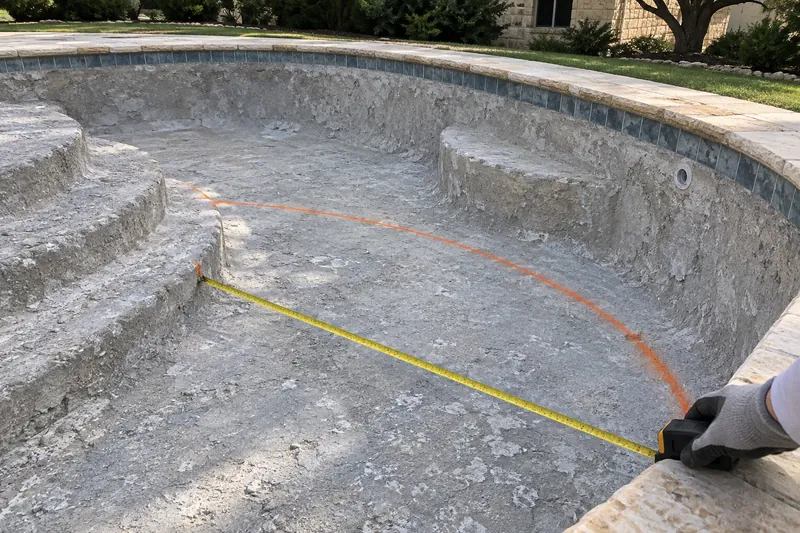
Tanning ledge questions
Is a tanning ledge worth it?
That comes down to how the pool will be used. The CDC's model code gives lounging in very shallow water as a shelf's main purpose, and in-pool loungers are sized for ledges of 6 to 9 inches. A ledge also adds surface to every later resurface: national 2026 figures put a tanning ledge or wading area at $500 to $2,500 on top of a replaster, depending on its size and the finish.
How much does it cost to install a tanning ledge in a pool?
On a new pool, typical Houston-area 2026 prices run $3,000 to $6,000 for a tanning ledge, also called a sun shelf. No Houston-area figure was found for adding one to an existing pool; national 2025 figures for retrofitting a baja shelf run from $2,000 to $20,000 or more. A Dallas–Fort Worth builder's 2026 guide explains the gap, putting the retrofit premium at typically 50 to 100 percent over new construction, because the pool is drained, the ground beside the shell dug out, new concrete placed, the whole interior replastered and the plumbing often re-routed. Those are published numbers rather than prices from League City Pool Resurfacing, which quotes the job free after seeing the pool.
How long does it take to add a tanning ledge to a pool?
No published figure times a ledge on its own, but the steps have their own clocks. New shotcrete should cure for 7 days or more, the American Shotcrete Association says, since wind, heat and dry air raise the risk of shrinkage cracking. A Houston builder's renovation page puts a replaster at 5 to 7 days, or 7 to 10 days with new tile and coping, and says a full remodel depends on scope; the refilled pool then goes through its start-up.
Is it normal for a tanning ledge to crack?
Small hairline cracks can be. Pebble Technology International says a few small closed shrinkage cracks, called check cracks, are not uncommon on upper steps and benches, as a natural trait of any cement-based material, and that most seal up once the pool is filled; it adds that cracking isn't covered by its limited warranty. SGM, whose Diamond Brite finish is used on zero-depth and beach entries, warns that the finish above the water dries to a different look and may check-crack, and that keeping exposed areas wet as they cure, for 7 to 28 days, cuts down shrinkage cracking.
How big is a typical tanning ledge?
A national pool supply retailer's 2026 guide counts a typical tanning ledge at 30 to 80 square feet, while the CDC's model code allows for anything from a widened top step to a broad shelf of its own. Measure it at water level, as Ledge Lounger advises, and we'll lay it out with you at the free estimate.
Get a free tanning ledge estimate in League City
Tell League City Pool Resurfacing whether you want a sun shelf, a beach entry or a bench, and roughly where it would go in the pool. Calls and estimate requests are answered 24/7.